What Is Jumu'ah (Friday Prayer) in Islam?
Mohd Danish
Founder & Developer
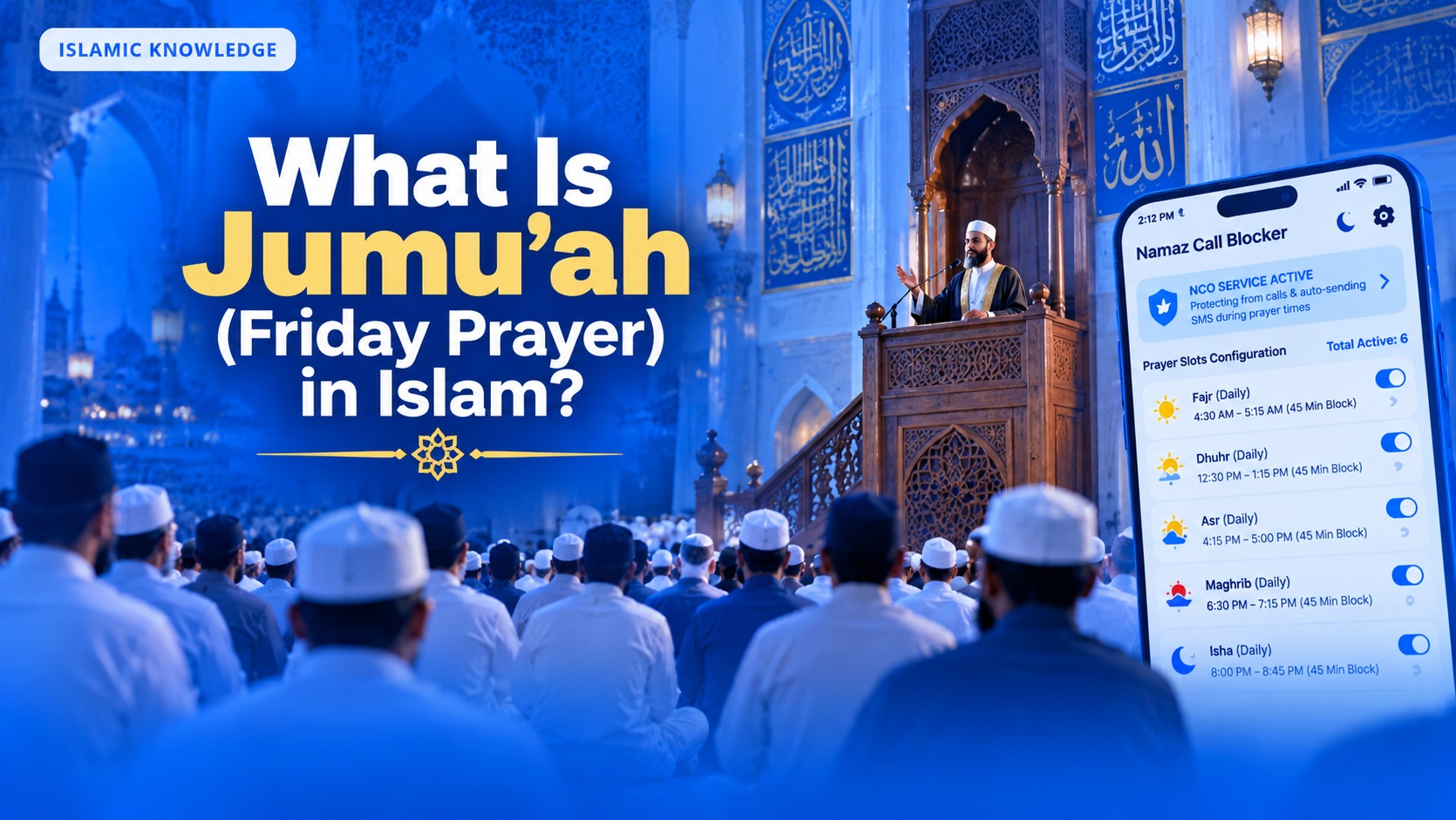
Every Friday, something familiar happens in Muslim communities around the world. Shops pause their business, people leave their workplaces, and worshippers gather in mosques to listen to a sermon and pray together.
For many Muslims, this has been part of life since childhood. Yet the significance of Jumu’ah goes much deeper than attending a weekly prayer.
Why is Friday so important in Islam? What makes Jumu’ah different from the daily Dhuhr prayer? And what did Prophet Muhammad (peace be upon him) teach about this day?
To understand Jumu’ah, we need to look at the Qur’an, the Sunnah and the purpose of gathering together in worship.
What Is Jumu’ah in Islam?
Jumu’ah (الْجُمُعَة), commonly called Jumma or Jummah, is Friday in Arabic. The Friday congregational prayer is known as Salat al-Jumu’ah (صَلَاةُ الْجُمُعَةِ).
Jumu’ah is a weekly congregational prayer performed on Friday during the time of Dhuhr. It consists of a Khutbah (sermon) followed by two obligatory Rak’ahs performed in congregation.
For those required to attend it, Jumu’ah takes the place of the regular four-Rak’ah Dhuhr prayer.
Unlike the five daily prayers, which Muslims perform throughout the week, Jumu’ah brings the community together for a special act of worship every Friday.
Salah itself is one of the Five Pillars of Islam. If you are unfamiliar with its meaning and purpose, read our guide to What Is Salah and Why Is It Important for Muslims?.
Why Is Friday Important in Islam?
Friday has a special place in Islamic teachings because Allah has prescribed a congregational prayer for this day, and Prophet Muhammad (peace be upon him) described its virtues.
In Sahih Muslim, Abu Hurairah (may Allah be pleased with him) narrated that the Prophet described Friday as the best day on which the sun has risen.
The Hadith also mentions several significant events associated with Prophet Adam (peace be upon him), including his creation and entry into Paradise.
Reference: Sahih Muslim 854b
This gives Friday a significance beyond the weekly calendar. It is a day associated with worship, remembrance and reflection on humanity’s relationship with Allah.
However, its importance should not be misunderstood. Islam does not teach that Muslims should worship Allah only on Fridays. The five daily prayers remain obligatory throughout the week.
Friday adds a special communal responsibility to a Muslim’s regular worship.
What Does the Qur’an Say About Jumu’ah?
The Qur’an directly mentions the Friday prayer in Surah Al-Jumu’ah, Chapter 62.
Allah says:
Surah Al-Jumu’ah (62:9)
Arabic:
يَـٰٓأَيُّهَا ٱلَّذِينَ ءَامَنُوٓا۟ إِذَا نُودِىَ لِلصَّلَوٰةِ مِن يَوْمِ ٱلْجُمُعَةِ فَٱسْعَوْا۟ إِلَىٰ ذِكْرِ ٱللَّهِ وَذَرُوا۟ ٱلْبَيْعَ ۚ ذَٰلِكُمْ خَيْرٌۭ لَّكُمْ إِن كُنتُمْ تَعْلَمُونَ
English translation — Sahih International:
“O you who have believed, when [the adhan] is called for the prayer on the day of Jumu’ah [Friday], then proceed to the remembrance of Allah and leave trade. That is better for you, if you only knew.”
Reference: Qur’an 62:9
Notice what this verse asks believers to do: when the call to Jumu’ah prayer is made, they must give priority to the remembrance of Allah over their commercial activities.
For someone managing a business, working in an office or dealing with daily responsibilities, this instruction carries a powerful reminder.
Our work matters. Our responsibilities matter. But there are moments when worship must take priority.
The following verse offers an equally important lesson.
Surah Al-Jumu’ah (62:10)
Arabic:
فَإِذَا قُضِيَتِ ٱلصَّلَوٰةُ فَٱنتَشِرُوا۟ فِى ٱلْأَرْضِ وَٱبْتَغُوا۟ مِن فَضْلِ ٱللَّهِ وَٱذْكُرُوا۟ ٱللَّهَ كَثِيرًۭا لَّعَلَّكُمْ تُفْلِحُونَ
English translation — Sahih International:
“And when the prayer has been concluded, disperse within the land and seek from the bounty of Allah, and remember Allah often that you may succeed.”
Reference: Qur’an 62:10
The two verses provide a balanced picture.
Muslims are instructed to leave their business for Jumu’ah when the obligation applies. Once the prayer is complete, they may return to their activities while continuing to remember Allah.
Islam does not require believers to abandon ordinary life. Instead, it teaches them to organize their lives around their responsibilities to Allah.
What Is the Importance of Jumu’ah Prayer?
Jumu’ah is not simply a shorter version of Dhuhr.
It has a distinct place in Islamic worship because of its congregational nature, the Friday Khutbah and the specific Qur’anic instruction to attend.
A Weekly Gathering for Muslims
During the week, people follow different routines. Some work long hours, others study, travel or care for their families.
On Friday, worshippers gather in one place, stand in rows and listen to a shared reminder.
Their financial circumstances, professions and social backgrounds may be different, but during Salah they turn toward the same Qibla and worship the same Creator.
This gathering is an important expression of the Muslim community.
An Opportunity to Learn and Reflect
The Friday Khutbah gives worshippers an opportunity to hear reminders about faith, good character, responsibilities and Islamic teachings.
A sermon may address honesty in business, kindness toward parents, helping people in need or improving one’s relationship with Allah.
These reminders are valuable because daily life can easily become filled with responsibilities that leave little time for reflection.
Jumu’ah creates a regular opportunity to reconnect with those priorities.
An Opportunity for Forgiveness
The Prophet Muhammad (peace be upon him) taught that the five daily prayers and one Friday prayer to the next are means of expiation for sins committed between them, provided major sins are avoided.
Reference: Sahih Muslim 233a
This is an encouraging teaching, but it should not be interpreted as permission to continue wrongdoing.
Sincere repentance, avoiding major sins and fulfilling the rights of others remain essential.
How Many Rak’ahs Are in Jumu’ah Prayer?
The obligatory Jumu’ah prayer consists of two Fard Rak’ahs performed in congregation after the Khutbah.
It is performed during the Dhuhr prayer period.
The number and arrangement of additional Sunnah prayers associated with Jumu’ah differ among Islamic schools.
Jumu’ah vs Dhuhr Prayer
| Feature | Jumu’ah | Dhuhr |
|---|---|---|
| Day | Friday | Daily |
| Obligatory Rak’ahs | 2 | 4 |
| Khutbah | Part of the prescribed Friday service | No Friday Khutbah |
| Congregation | Required for a valid Jumu’ah | Not universally required for validity |
| Main purpose | Weekly congregational worship | Daily obligatory worship |
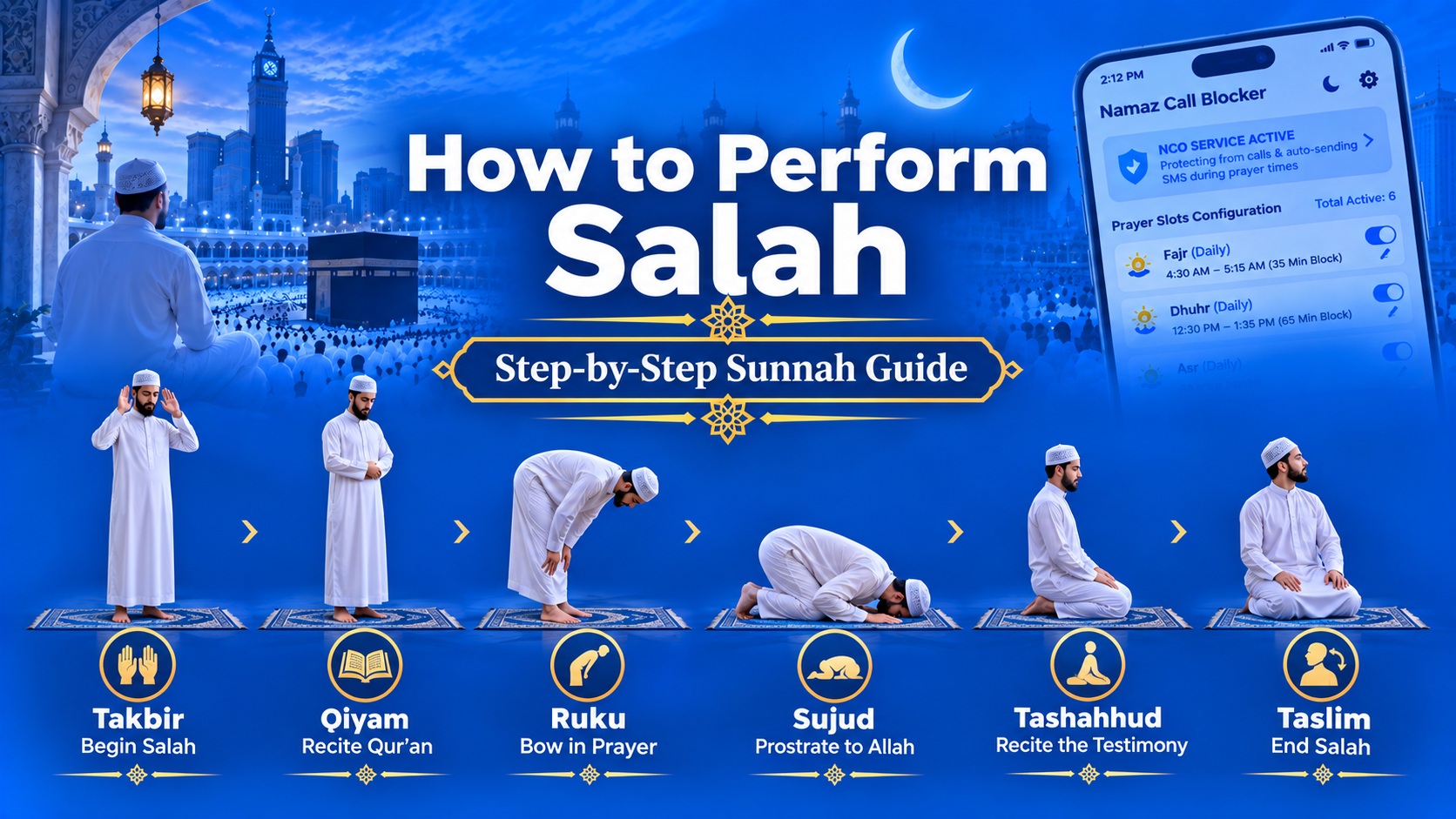
If you are still learning the movements and recitations of prayer, our article How to Perform Salah: Step-by-Step Sunnah Guide explains Takbir, Ruku, Sujud, Tashahhud and Taslim.
What Is the Jumu’ah Khutbah?
The Khutbah is the sermon delivered by the Imam or Khateeb before the Friday prayer.
It is an essential part of the prescribed Jumu’ah service.
In the familiar Sunni practice, the Khateeb delivers two sermon portions with a brief sitting between them. Details concerning the required content, language and conditions of the Khutbah vary among schools of Islamic law.
The sermon may include praise of Allah, Qur’anic teachings, reminders about faith and guidance for daily life.
Its purpose is not merely to provide information. It is also a reminder to reflect on one’s actions and responsibilities.
Why Should Muslims Remain Silent During the Khutbah?
Listening attentively to the Khutbah is strongly emphasized in authentic Hadith.
Prophet Muhammad (peace be upon him) warned against speaking to another person during the sermon—even telling someone else to be quiet.
Reference: Sahih al-Bukhari 934
This shows the importance of giving the Khutbah proper attention.
Conversations, unnecessary phone use and other avoidable distractions should be kept away from this part of Jumu’ah.
What Are the Sunnah Practices of Friday?
Islamic teachings encourage several acts of preparation and worship associated with Friday.
1. Perform Ghusl Before Jumu’ah
Ghusl, or ritual bathing, is strongly emphasized in authentic Hadith concerning Friday.
The Prophet Muhammad (peace be upon him) gave clear instructions regarding bathing for Jumu’ah.
Reference: Sahih Muslim 846a
Scholars differ on whether the Friday Ghusl is obligatory in itself or an emphasized Sunnah under ordinary circumstances.
It is also important to distinguish Friday Ghusl from Ghusl required because of major ritual impurity.
For more information, read What Is Ghusl and When Is It Necessary Before Salah?.
2. Maintain Personal Cleanliness
Friday preparation includes paying attention to personal hygiene.
Authentic narrations mention using the Miswak and applying suitable perfume.
Reference: Sahih Muslim 846b
Clean clothing, good hygiene and avoiding unpleasant odours help create a comfortable environment for everyone attending the mosque.
These are practical expressions of respect for fellow worshippers.
3. Arrive at the Mosque Early
The Prophet Muhammad (peace be upon him) described the special reward associated with arriving early for Jumu’ah.
One Hadith mentions different levels of reward for those arriving at successive earlier periods, using examples of charitable offerings.
Reference: Sahih al-Bukhari 881
Arriving early also gives worshippers time to settle down and prepare for the Khutbah.
Rather than entering the mosque in a hurry, a person can approach the prayer with greater calmness.
4. Listen Carefully to the Khutbah
The Khutbah deserves attention.
Avoid unnecessary conversations and activities that distract you or other worshippers.
If your phone may ring, take practical steps to silence it before the sermon begins.
5. Make Dua and Remember Allah
Friday is also associated with a special time during which supplications are answered.
Abu Hurairah (may Allah be pleased with him) narrated that Prophet Muhammad (peace be upon him) spoke about a short period on Friday connected with the acceptance of supplication.
Reference: Sahih Muslim 852a
Scholars have discussed different narrations concerning the precise timing of this period.
Rather than claiming one disputed time as certain, Muslims can increase their sincere supplications throughout Friday.
What About Reciting Surah Al-Kahf on Friday?
Reciting Surah Al-Kahf on Friday is a widely observed practice among Muslims.
Narrations concerning its virtues are found in Hadith literature, and scholars have discussed their chains and grading.
Because the reports and their authentication deserve careful treatment, it is better to examine them separately rather than present every commonly shared claim as unquestionably authentic.
The Qur’anic chapter itself contains important lessons about faith, trials, knowledge and humility.
You can read the complete chapter here:
A separate article can examine the Friday-related narrations, their authenticity and the lessons of the Surah in greater detail.
What Happens If Someone Misses Jumu’ah?
Missing Jumu’ah without a valid excuse is a serious matter for someone upon whom it is obligatory.
However, not every absence is the same.
Illness, travel and other recognized circumstances may affect whether attendance is required.
If a person misses the valid Jumu’ah congregation, the usual ruling is to perform the four-Rak’ah Dhuhr prayer rather than attempt to perform Jumu’ah alone.
There are also specific juristic rules for someone who arrives late and joins the congregation after the prayer has begun.
These rules should be learned from a qualified teacher, particularly because the schools differ on some details.
Common Mistakes to Avoid on Friday
A few everyday habits can interfere with the purpose of Jumu’ah.
Arriving only after the Khutbah has begun: Whenever possible, plan your schedule to arrive earlier.
Talking during the sermon: The Hadith specifically warns against unnecessary speech while the Imam delivers the Khutbah.
Ignoring personal hygiene: Cleanliness matters, especially when many people gather closely together.
Treating Friday prayer as a replacement for all other prayers: Jumu’ah does not remove the obligation to perform Fajr, Asr, Maghrib or Isha.
Becoming distracted by mobile phones: A ringing phone can interrupt the Khutbah and disturb other worshippers.
Leaving without reflecting on the message: Try to remember one useful lesson from the Khutbah and apply it during the coming week.
The purpose is not to make Friday unnecessarily difficult. It is to approach an important act of worship with preparation and respect.
How Can Technology Help Reduce Distractions During Jumu’ah?

Modern smartphones are useful for work, communication and everyday responsibilities.
However, an incoming call or notification during the Khutbah can disturb both the phone owner and the people nearby.
The simplest solution is to silence the phone before entering the mosque.
For Android users who want additional call-management features, Namaz Call Blocker offers options such as scheduled call rejection, automatic SMS replies, silent or vibrate mode and restoration of the previous sound setting after the configured prayer period.
The app is free to use, works without an internet connection and is designed for Android.
Technology can help manage interruptions, but it cannot replace the personal effort required to listen attentively and worship with sincerity.
For more preparation advice, read Things to Know Before Praying Salah: The Sunnah Way.
Frequently Asked Questions About Jumu’ah
1. What does Jumu’ah mean in English?
Jumu’ah means Friday. The term is also associated with gathering, and Salat al-Jumu’ah refers to the Friday congregational prayer.
2. Is Jumma the same as Jumu’ah?
Yes. Jumma, Jummah and Jumu’ah are different English spellings commonly used for the Arabic word الْجُمُعَة.
3. Why is Friday special for Muslims?
Friday is special because of the prescribed congregational prayer, the Qur’anic instruction to attend it and authentic Hadith describing the virtues of the day.
4. Is Jumu’ah prayer obligatory?
It is ordinarily obligatory for adult, sane, resident Muslim men who meet the relevant conditions and have no valid excuse. Exemptions and details depend on Islamic jurisprudence.
5. How many Fard Rak’ahs are in Jumu’ah?
Jumu’ah consists of two obligatory Rak’ahs performed in congregation after the Khutbah.
6. Is Jumu’ah the same as Dhuhr?
No. Jumu’ah is a distinct Friday congregational prayer that replaces Dhuhr for those who perform a valid Jumu’ah. Someone exempt who does not attend performs Dhuhr.
7. Can women attend Jumu’ah prayer?
Yes. Women may attend Jumu’ah, and a valid Jumu’ah prayer ordinarily fulfils their Dhuhr obligation for that day. Attendance is not generally obligatory for women.
8. Is Ghusl necessary before Friday prayer?
Friday Ghusl is strongly emphasized in authentic Hadith. Scholars differ concerning its legal classification in ordinary circumstances.
9. Can Jumu’ah be performed alone at home?
Jumu’ah is a congregational prayer with specific conditions. It is not ordinarily performed alone. Someone unable to attend a valid Jumu’ah congregation generally performs Dhuhr instead.
10. Is there a special time for Dua on Friday?
Yes. Authentic Hadith mentions a special time associated with answered supplications. Scholars have differed about its precise timing.
Explore Our Salah Learning Series
Understanding Jumu’ah becomes easier when we first understand Salah and the preparations required for prayer.
These related articles explore each subject in greater detail:
| Article | What You Will Learn |
|---|---|
| Five Pillars of Islam | The foundations of Islamic worship and the place of Salah |
| What Is Salah and Why Is It Important for Muslims? | The purpose and importance of daily prayer |
| What Is Wudu? | Ritual washing and purification before Salah |
| What Is Ghusl? | When ritual bathing is required |
| What Is Tayammum? | Dry purification and its conditions |
| Things to Know Before Praying Salah | Preparation, cleanliness, Qibla and intention |
| How to Perform Salah: Step-by-Step Sunnah Guide | The movements and recitations of prayer |
Moral of the Blog: What Can Friday Teach Us?
Imagine someone who spends the entire week occupied with work, family responsibilities and countless small concerns.
Friday arrives, and for a short time, that person leaves everything behind to stand with others in worship.
The same person who was worried about a business meeting, a financial problem or a difficult conversation is reminded that life is about more than the next task.
This is one of the meaningful lessons we can draw from Jumu’ah.
It teaches us to make time for Allah even when life is busy. It reminds us that wealth, work and responsibilities have their place, but they should not make us forget our Creator.
The Qur’an beautifully connects both sides of life: leave business for the remembrance of Allah when Jumu’ah is called, then return to your activities while continuing to remember Him.
Friday is therefore not simply a weekly break from work.
It is a weekly reminder to return to what matters, renew our intentions and carry the lessons of worship into everyday life.
Conclusion
Jumu’ah holds an important place in Islam because it combines worship, community, remembrance and reflection.
The Qur’an calls believers to give priority to Friday prayer, while authentic Hadith explains the virtues of the day and the importance of preparing for it properly.
Through the Khutbah and congregational Salah, Muslims are reminded of their relationship with Allah and their responsibilities toward others.
Whether someone has attended Jumu’ah for many years or is learning about it for the first time, understanding its meaning can make the experience more thoughtful and purposeful.
And when the prayer ends, its lessons should not remain inside the mosque.
They should continue through our work, our families, our character and the choices we make throughout the week.
Qur’an and Authentic Hadith References
| Source | Subject |
|---|---|
| Qur’an 62:9 | Attending Friday prayer and leaving trade |
| Qur’an 62:10 | Returning to daily activities and remembering Allah |
| Sahih Muslim 854b | Virtues of Friday |
| Sahih Muslim 233a | Friday prayer and expiation of sins |
| Sahih Muslim 846a | Friday Ghusl |
| Sahih Muslim 846b | Miswak and perfume |
| Sahih al-Bukhari 881 | Virtue of arriving early |
| Sahih al-Bukhari 934 | Listening silently to the Khutbah |
| Sahih Muslim 852a | Special time for supplication on Friday |
Educational note: This article presents widely accepted Sunni teachings about Jumu’ah. Some rulings differ among the Hanafi, Shafi’i, Maliki and Hanbali schools. For personal circumstances or detailed religious rulings, consult a qualified Islamic scholar.