Five Pillars of Islam: Why Should Muslims Follow Them?
Mohd Danish
Founder & Developer
Every human being searches for meaning, peace, and purpose. We spend years building careers, earning money, caring for our families, and planning for the future. Yet one important question remains: Why were we created, and what responsibilities do we have toward our Creator?
Islam teaches that life has a purpose. Allah Subhanahu wa Ta’ala has provided guidance through the Qur’an and the teachings of Prophet Muhammad (peace be upon him).
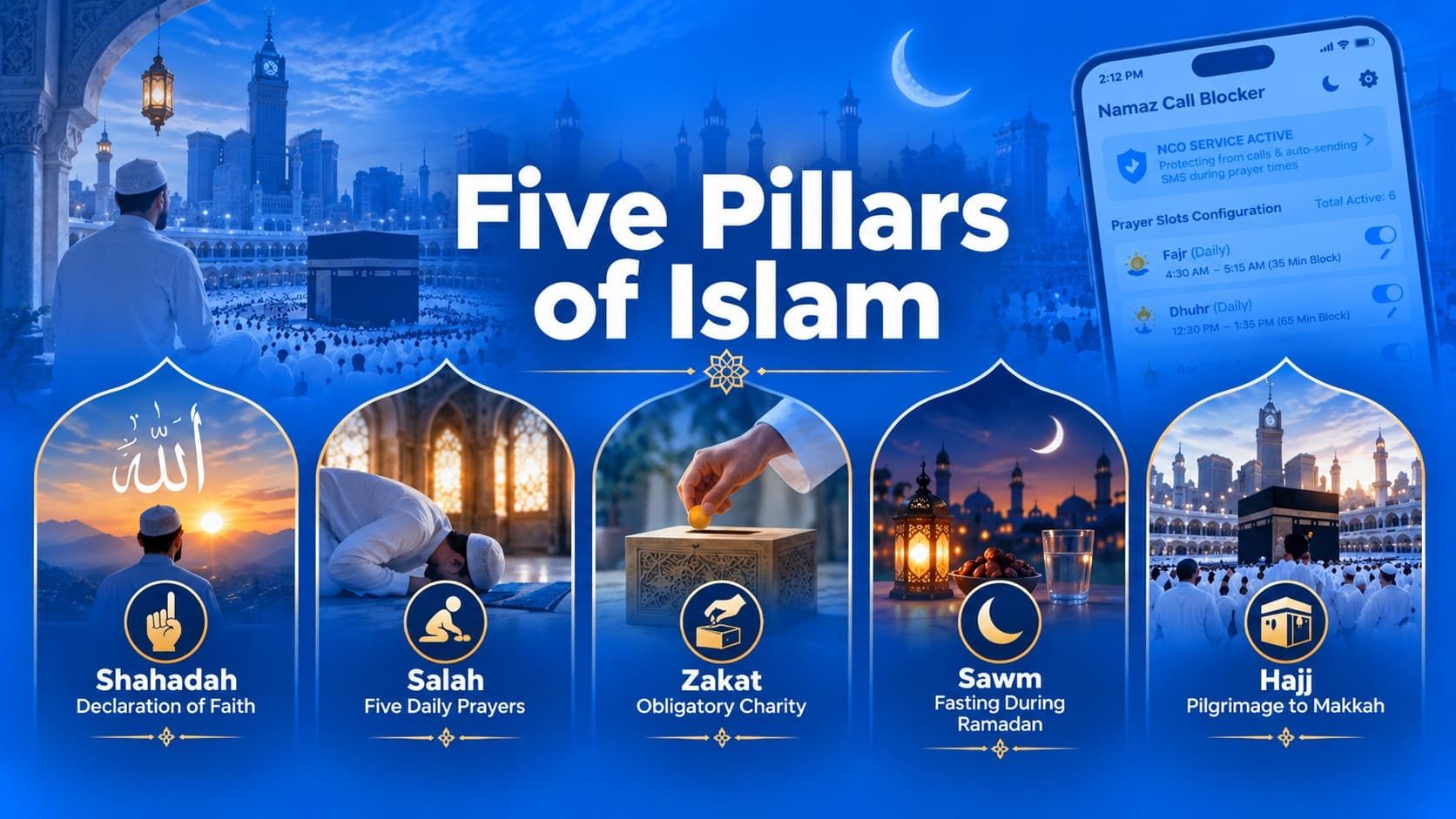
The Five Pillars of Islam are the foundation of Islamic practice: Shahadah (Declaration of Faith), Salah (Five Daily Prayers), Zakat (Obligatory Charity), Sawm (Fasting During Ramadan), and Hajj (Pilgrimage to Makkah).
These pillars are more than religious traditions. They are fundamental acts of worship that encourage Muslims to strengthen their faith, develop good character, and fulfill their responsibilities toward Allah and His creation.
The Five Pillars of Islam According to Prophet Muhammad (Peace Be Upon Him)
Prophet Muhammad (peace be upon him) explained that Islam is built upon five foundations.
Original Arabic Hadith:
بُنِيَ الإِسْلاَمُ عَلَى خَمْسٍ شَهَادَةِ أَنْ لاَ إِلَهَ إِلاَّ اللَّهُ وَأَنَّ مُحَمَّدًا رَسُولُ اللَّهِ، وَإِقَامِ الصَّلاَةِ، وَإِيتَاءِ الزَّكَاةِ، وَالْحَجِّ، وَصَوْمِ رَمَضَانَ
Explanation: This authentic Hadith identifies the declaration of faith, establishing prayer, paying Zakat, performing Hajj, and fasting during Ramadan as the five foundations of Islam.
Reference: Sahih al-Bukhari 8
Just as a building depends upon its foundation, Islamic religious practice rests upon these essential obligations.
1. Shahadah — Declaration of Faith
Shahadah is the first pillar of Islam and the foundation of a Muslim’s faith.
It is the declaration that there is no deity worthy of worship except Allah and that Prophet Muhammad (peace be upon him) is His Messenger.
Arabic:
أَشْهَدُ أَنْ لَا إِلَٰهَ إِلَّا اللَّهُ وَأَشْهَدُ أَنَّ مُحَمَّدًا رَسُولُ اللَّهِ
Meaning:
“I bear witness that there is no deity worthy of worship except Allah, and I bear witness that Muhammad is the Messenger of Allah.”
Shahadah expresses Tawhid, the belief in the absolute oneness of Allah.
Why Is Shahadah Important?
Shahadah is not merely a sentence spoken aloud. It is a declaration of faith that should influence a Muslim’s beliefs, decisions, worship, and character.
Allah Subhanahu wa Ta’ala says in Surah Al-Ikhlas (112:1):
Original Arabic:
قُلْ هُوَ ٱللَّهُ أَحَدٌ
English translation: Read Sahih International’s original translation.
This verse establishes the oneness of Allah, which lies at the heart of Shahadah.
Reflecting on Allah’s Creation
Human beings have achieved remarkable progress in science, medicine, engineering, and artificial intelligence.
Modern technologies often draw inspiration from human abilities such as vision, hearing, learning, and memory.
Yet the human body and natural world remain extraordinary subjects for reflection.
From an Islamic perspective, these are opportunities to appreciate the wisdom and creation of Allah Subhanahu wa Ta’ala.
Explore further: Artificial Intelligence (AI) and Islam | Computer Fundamentals
Reflection: If our existence is a gift, should we not seek to know and worship the One who gave us life?
2. Salah — Five Daily Prayers
Salah is the second pillar of Islam and an obligatory act of worship performed five times daily.
The five daily prayers are:
- Fajr: Before sunrise.
- Dhuhr: After midday.
- Asr: During the afternoon.
- Maghrib: After sunset.
- Isha: During the night.
Salah is also commonly called Namaz in South Asian languages.
Why Should Muslims Perform Salah?
Throughout the day, we make time for work, meetings, meals, entertainment, and conversations.
But how much time do we dedicate to remembering Allah?
Salah creates regular moments when Muslims leave worldly distractions behind and turn their attention toward their Creator.
During prayer, a person stands before Allah, recites His words, bows, and places their forehead on the ground in prostration.
It reminds believers that worldly wealth and status are not the purpose of worship.
What Does the Qur’an Teach About Salah?
Allah Subhanahu wa Ta’ala says in Surah Al-Ankabut (29:45):
Original Arabic — Relevant Passage:
إِنَّ ٱلصَّلَوٰةَ تَنْهَىٰ عَنِ ٱلْفَحْشَآءِ وَٱلْمُنكَرِ
English translation: Read the complete Sahih International translation.
This verse connects prayer with avoiding immorality and wrongdoing.
A Reflection on Salah
Our hearts continue beating, our lungs continue breathing, and our eyes allow us to see the world.
These blessings are so familiar that we rarely stop to appreciate them.
Salah offers an opportunity to remember Allah and express gratitude.
If we can make time for countless worldly responsibilities, should we not make time to worship the One who has blessed us with life?
Learn more: Why Is Namaz Important in Islam?
3. Zakat — Obligatory Charity
Zakat is the third pillar of Islam and an obligatory financial act of worship for Muslims who meet its conditions.
For many common categories of qualifying monetary wealth, Zakat is calculated at 2.5%, subject to the relevant Islamic rules.
It differs from voluntary charity, known as Sadaqah.
Why Should Muslims Give Zakat?
Wealth can provide comfort and security, but Islam teaches that it also brings responsibilities.
Not everyone has the same opportunities or financial circumstances.
Some families struggle to afford food, clothing, shelter, or other basic necessities.
Zakat reminds eligible Muslims that part of their wealth carries an obligation toward specified recipients.
What Does the Qur’an Teach About Zakat?
In Surah At-Tawbah (9:60), Allah identifies the categories of people eligible to receive Zakat, including the poor and needy.
Reference: Qur’an 9:60 — Sahih International
This verse establishes that Zakat has defined recipients and is not simply an unrestricted charitable donation.
A Reflection on Wealth
Imagine a person who has enough food for the week while another family nearby is uncertain about their next meal.
Islam encourages Muslims to recognize such hardship and fulfill their responsibilities toward others.
Wealth may increase or decrease, but generosity, gratitude, and accountability remain important.
Zakat reminds us that our possessions should never cause us to forget those in need.
4. Sawm — Fasting During Ramadan
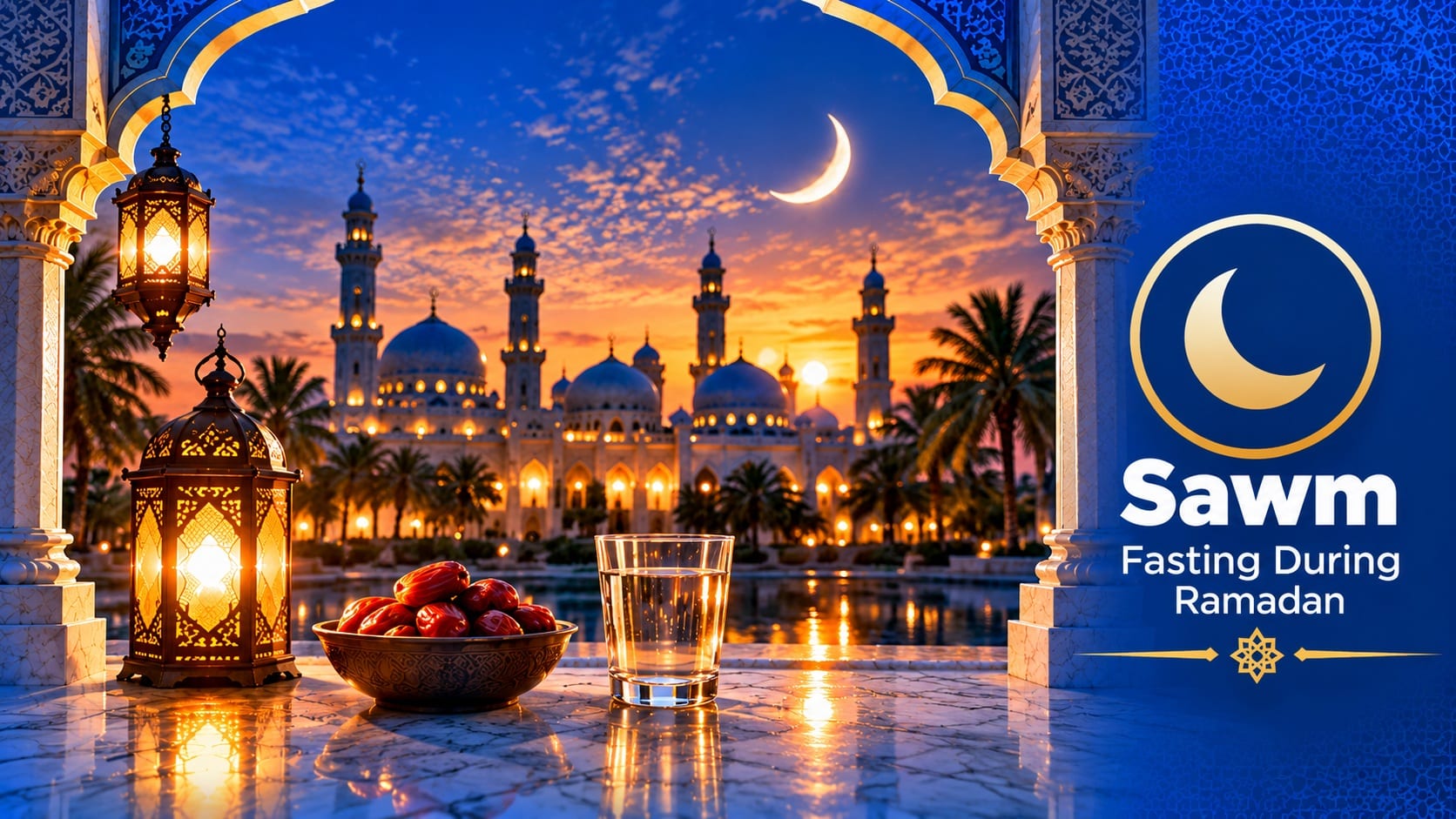
Sawm is the fourth pillar of Islam and refers to the obligatory fasting of Ramadan.
During Ramadan, Muslims who are required to fast abstain from food, drink, and sexual relations from dawn until sunset.
Fasting is also an opportunity to improve conduct, increase worship, and develop self-control.
Islam provides exemptions and accommodations for qualifying circumstances, including illness and travel.
Why Should Muslims Fast During Ramadan?
We eat when we are hungry, drink when we are thirsty, and often seek immediate comfort.
Fasting teaches Muslims to practice patience and control their actions for the sake of Allah.
It also encourages gratitude for blessings that are easily overlooked.
What Does the Qur’an Teach About Fasting?
Allah Subhanahu wa Ta’ala says in Surah Al-Baqarah (2:183):
Original Arabic:
يَـٰٓأَيُّهَا ٱلَّذِينَ ءَامَنُوا۟ كُتِبَ عَلَيْكُمُ ٱلصِّيَامُ كَمَا كُتِبَ عَلَى ٱلَّذِينَ مِن قَبْلِكُمْ لَعَلَّكُمْ تَتَّقُونَ
English translation: Read Sahih International’s original translation.
This verse establishes fasting as an obligation and connects it with the development of righteousness and consciousness of Allah.
A Reflection on Ramadan
Imagine reaching sunset after a day of fasting.
A simple glass of water suddenly feels precious. Food that we might ordinarily take for granted becomes a blessing we deeply appreciate.
Fasting reminds us how dependent we are on Allah’s provisions.
It also encourages us to remember those who experience hunger because of hardship.
If Ramadan teaches us patience and gratitude, why should we forget those lessons during the rest of the year?
5. Hajj — Pilgrimage to Makkah
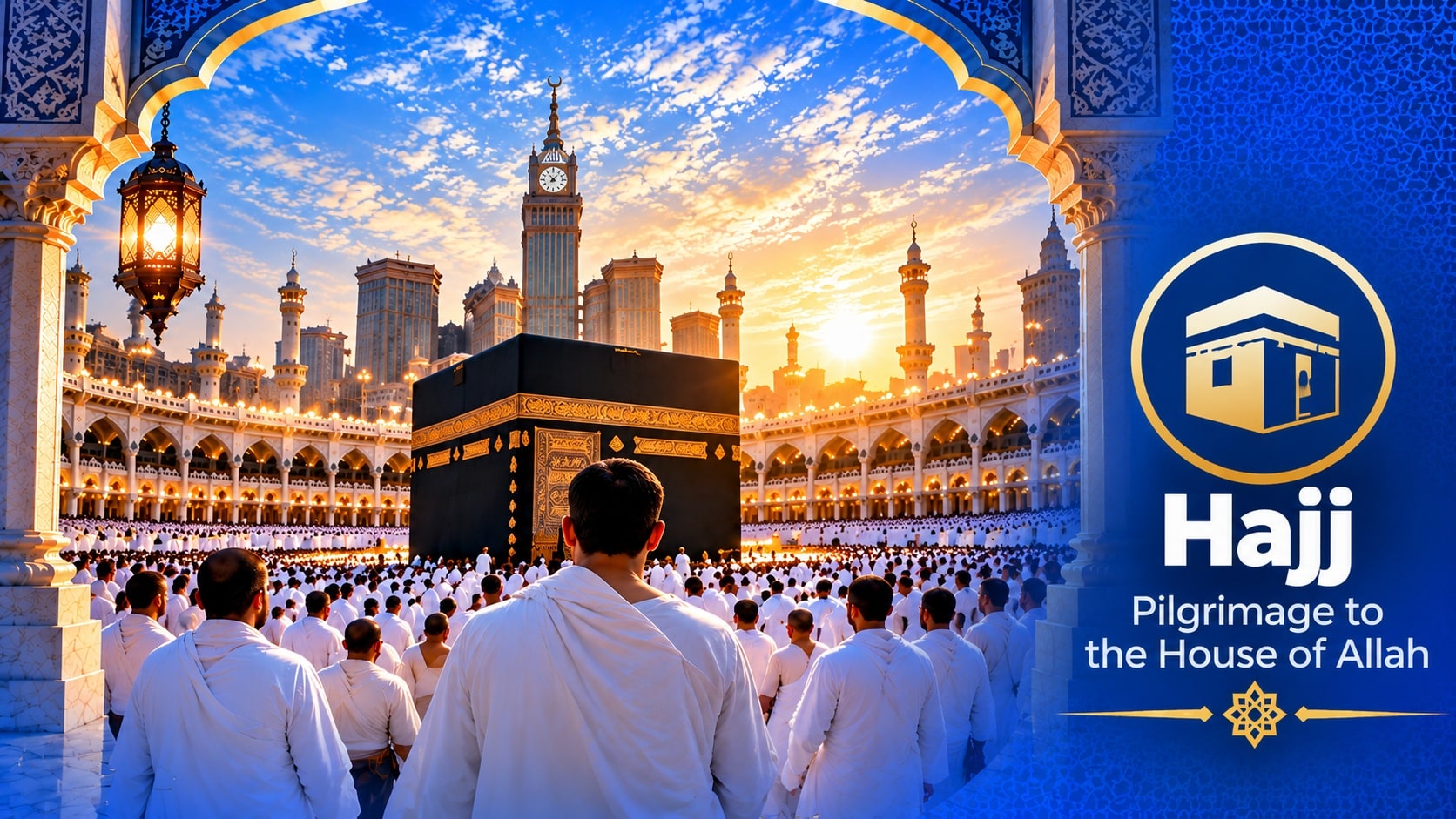
Hajj is the fifth pillar of Islam and an obligatory pilgrimage once in a lifetime for Muslims who meet the conditions of ability.
It takes place during Dhul Hijjah in Makkah, Saudi Arabia, and the surrounding sacred sites.
Hajj includes prescribed acts of worship such as Ihram, Tawaf around the Kaaba, Sa’i between Safa and Marwah, and standing at Arafat.
Why Should Muslims Perform Hajj?
Hajj brings Muslims from different countries, languages, cultures, and backgrounds together for one purpose: worshipping Allah.
A wealthy person and someone of modest means may stand side by side in prayer.
Nationality, profession, and worldly status do not determine the value of their worship.
Hajj reminds believers that they belong to a wider community united by faith.
What Does the Qur’an Teach About Hajj?
Allah Subhanahu wa Ta’ala says in Surah Ali ‘Imran (3:97):
Original Arabic — Relevant Passage:
وَلِلَّهِ عَلَى ٱلنَّاسِ حِجُّ ٱلْبَيْتِ مَنِ ٱسْتَطَاعَ إِلَيْهِ سَبِيلًا
English translation: Read the complete Sahih International translation.
This verse establishes pilgrimage to the Sacred House as an obligation for those who are able to undertake it.
A Reflection on Hajj
Imagine people from every corner of the world standing together, calling upon the same Creator.
They may have different histories, languages, and circumstances, yet they share the same purpose.
Hajj reminds Muslims that worldly differences should not prevent unity, humility, and devotion to Allah.
Why Should Muslims Follow the Five Pillars of Islam?
The primary reason Muslims follow the Five Pillars is that they are foundational religious obligations established in Islam.
Their importance is not limited to outward rituals. They also encourage believers to develop a meaningful relationship with Allah and fulfill their responsibilities toward others.
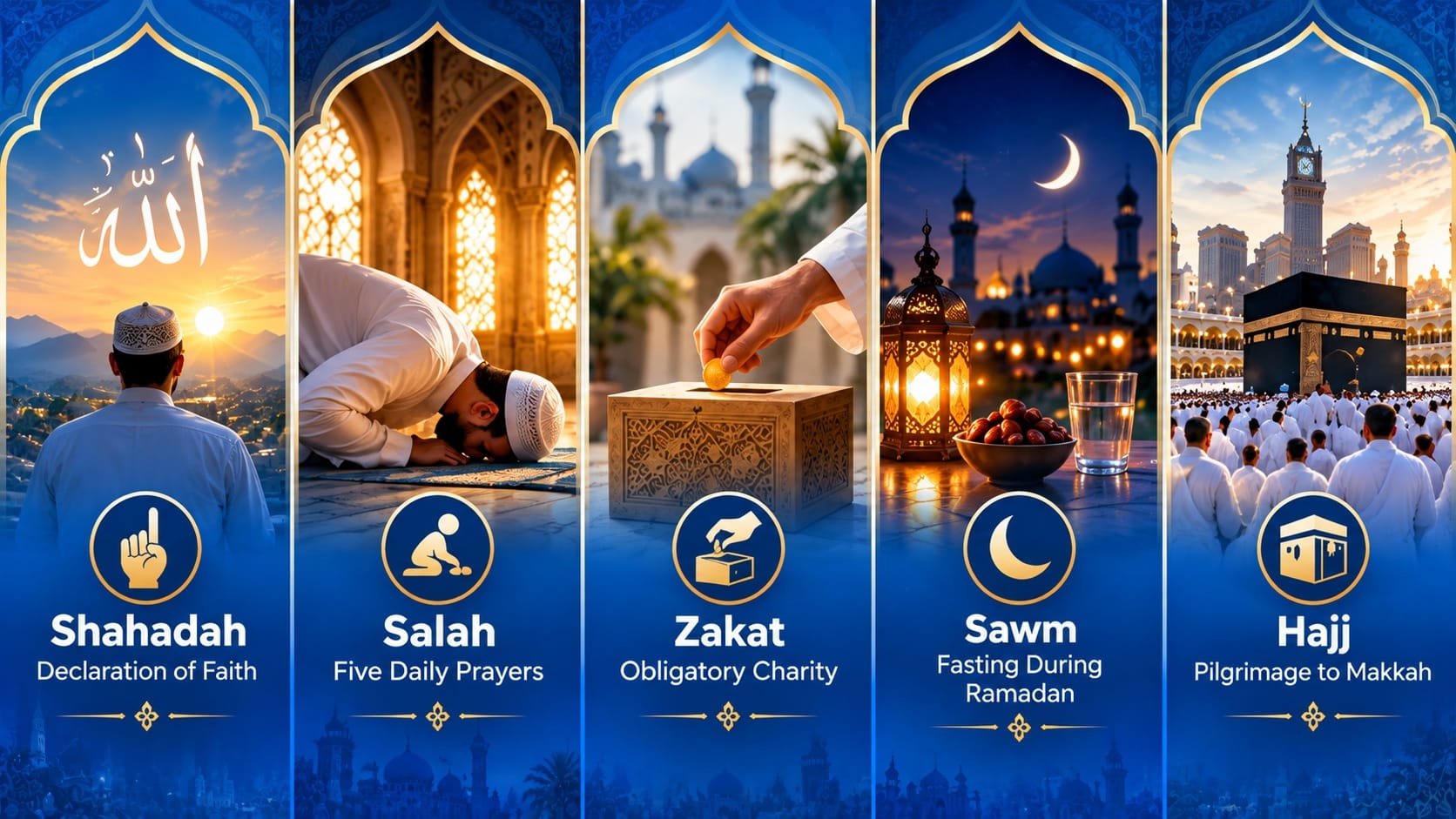
Each pillar offers an important lesson:
- Shahadah: Establishes faith in Allah and His Messenger.
- Salah: Creates regular opportunities for worship and remembrance.
- Zakat: Establishes financial responsibilities toward eligible recipients.
- Sawm: Encourages patience, gratitude, and self-control.
- Hajj: Teaches humility, sacrifice, and unity.
These acts of worship should influence how Muslims live, speak, work, and treat others.
The Five Pillars remind us that sincere faith should be reflected in our actions.
Are All Five Pillars Obligatory for Every Muslim?
The Five Pillars are fundamental to Islam, but their practical requirements depend on specific conditions.
Shahadah establishes the foundation of Islamic faith.
Salah is obligatory for accountable Muslims, subject to applicable religious rules and exemptions.
Zakat becomes obligatory when the relevant financial conditions are met.
Fasting during Ramadan is obligatory for those required to fast, with recognized exemptions and accommodations.
Hajj is obligatory once in a lifetime for those who possess the required ability.
For example, someone who does not meet the financial conditions for Zakat is not required to pay it. Similarly, someone who lacks the necessary ability to perform Hajj is not required to undertake the pilgrimage.
What Can Someone Exploring Islam Learn From the Five Pillars?
For someone who is not Muslim, the Five Pillars offer an introduction to how Islamic faith is expressed through worship and everyday responsibilities.
Islam invites people to reflect on important questions:
Who created us? Why are we here? What gives life meaning? And what responsibilities do we have toward our Creator and fellow human beings?
These are questions worth exploring sincerely, regardless of a person’s background.
The Qur’an teaches in Surah Al-Baqarah (2:256):
Original Arabic — Relevant Passage:
لَآ إِكْرَاهَ فِى ٱلدِّينِ
English translation: Read Sahih International’s original translation.
This passage establishes the principle that there is no compulsion in religion.
Someone interested in Islam can begin by studying the meaning of Shahadah, reading the Qur’an, learning about Prophet Muhammad (peace be upon him), and asking sincere questions.
Faith should be embraced through understanding and personal conviction.
Frequently Asked Questions About the Five Pillars of Islam
What are the Five Pillars of Islam in order?
The commonly taught order is Shahadah, Salah, Zakat, Sawm, and Hajj. Authentic Hadith narrations may list fasting and Hajj in a different sequence.
Why are the Five Pillars important?
They establish the foundational acts of Islamic practice and encourage faith, regular worship, financial responsibility, self-discipline, and devotion to Allah.
Where are the Five Pillars mentioned in Islam?
The Five Pillars are explicitly identified together in authentic Hadith, including Sahih al-Bukhari 8. Their individual obligations are also taught in the Qur’an.
Is Salah compulsory for Muslims?
Yes. The five daily prayers are obligatory for accountable Muslims, subject to applicable religious rules and exemptions.
Is Zakat obligatory for everyone?
No. Zakat is obligatory for Muslims who meet the relevant financial and religious conditions.
Why do Muslims fast during Ramadan?
Muslims fast in obedience to Allah. Fasting also develops self-control, patience, gratitude, and consciousness of Allah.
Must every Muslim perform Hajj?
Hajj is obligatory once in a lifetime for Muslims who meet the conditions of ability.
Can someone become Muslim by declaring Shahadah?
Shahadah is the declaration through which a person enters Islam when it is made sincerely with belief in its meaning. Understanding its significance is an important part of that decision.
Moral of the Blog: Remember the One Who Gave You Everything
We spend much of our lives pursuing success.
We work hard to earn money, build homes, develop skills, and create a better future for ourselves and our families.
These efforts can be valuable.
But in the middle of these responsibilities, we should also reflect on the blessings that make everything possible.
Our ability to breathe, see, hear, think, learn, and love is extraordinary.
Every new day gives us another opportunity to do good, correct our mistakes, and remember Allah Subhanahu wa Ta’ala.
The Five Pillars of Islam remind Muslims not to forget their Creator while pursuing worldly goals.
A successful life is not measured only by what we achieve in this world, but also by how sincerely we fulfill our responsibilities toward Allah and His creation.
For Muslims, the Five Pillars are an opportunity to renew that commitment.
For those exploring Islam, they offer a meaningful starting point for understanding a faith centered on the worship of One God.
May Allah Subhanahu wa Ta’ala guide us toward beneficial knowledge, sincere faith, good character, and gratitude for His countless blessings.
Ameen.
Stay Focused on Salah With Namaz Call Blocker
Salah is the second pillar of Islam and an important part of a Muslim’s daily life.
In today’s connected world, incoming phone calls can sometimes interrupt moments of prayer.
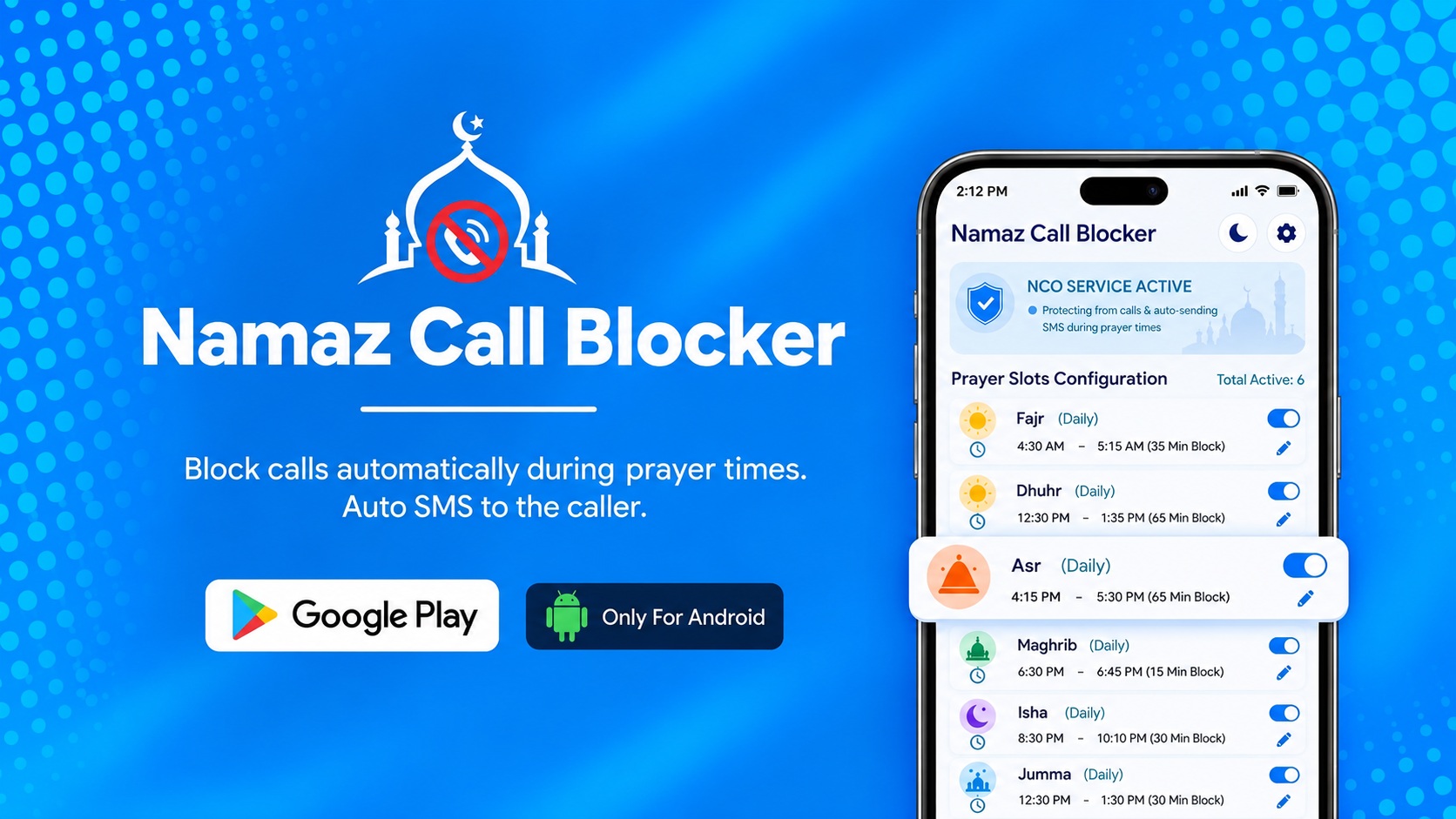
Salah App – Namaz Call Blocker (NCB) is an Android application designed to help Muslims reduce phone distractions during Salah.
The app offers scheduled call rejection, optional automatic SMS replies, Silent/Vibrate modes, and automatic restoration after the configured prayer period.
Free to Use | No Internet | No Ads | Your Data Is Safe
Only for Android
Learn more: https://namazcallblocker.com
Islamic References
- Sahih al-Bukhari 8 — The Five Pillars of Islam
- Qur’an 112:1 — The Oneness of Allah
- Qur’an 29:45 — Salah and Moral Conduct
- Qur’an 9:60 — Eligible Zakat Recipients
- Qur’an 2:183 — Fasting During Ramadan
- Qur’an 3:97 — The Obligation of Hajj
- Qur’an 2:256 — No Compulsion in Religion
Translation note: The English explanations in this article are editorial summaries, not verbatim Qur’an translations. The linked references provide the original Sahih International translations.