Aalmi Tabligi Ijtema , Bhopal 2026
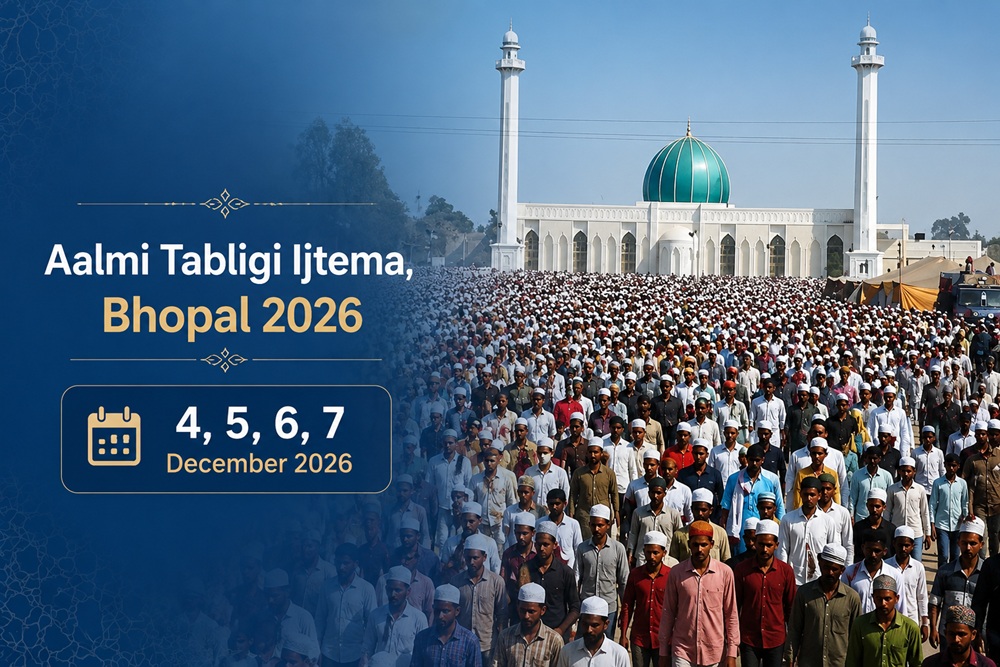
Aalmi Tabligi Ijtema, Bhopal 2026 is scheduled for 4, 5, 6 and 7 December 2026. The Bhopal Ijtema is a major Islamic gathering where Muslims from different parts of India and visitors from overseas come together around Namaz, religious talks, ta’leem, zikr, dua and community. The gathering has grown from a small beginning into a very large annual event associated with Bhopal.
What Is Aalmi Tabligi Ijtema?
The word Ijtema refers to a gathering or assembly. The Aalmi Tabligi Ijtema in Bhopal brings Muslims together for Namaz, bayan, ta’leem, zikr, dua and religious reminders. Jamaats arrive from different parts of India, while Jamaats from overseas countries have also participated over the years.
For many visitors, the Ijtema is more than simply attending a large event. It is an opportunity to step away from normal routines and spend time around Namaz, religious learning, remembrance of Allah and the company of other Muslims. The environment encourages people to think about their daily lives, their prayers and how they can improve their practice of Islam.
The 2026 Ijtema is scheduled for 4, 5, 6 and 7 December 2026. Since arrangements for a gathering of this size can change, visitors should check the latest organiser and local-authority information before travelling.
The History of Bhopal Ijtema
The history of the Bhopal Ijtema goes back to the late 1940s. Sources differ slightly on the exact year and the number of people at the earliest gathering, but historical accounts consistently describe the beginning as a small gathering in Bhopal that later grew substantially.
The early Ijtema was associated with Masjid Shakoor Khan in Bhopal. As attendance increased, the gathering was later held at Taj-ul-Masajid. With the growing number of visitors and the need for more space, the venue eventually moved to the Eintkhedi area outside the main city.
This growth over several decades is one of the notable parts of the Bhopal Ijtema’s history. A gathering that began on a much smaller scale eventually developed into an international congregation attracting very large numbers of people from India and abroad.
Previous reports illustrate this growth. In 2023, organisers expected more than one million people to attend. In 2025, reports again described attendance around the million-plus level, although estimates varied by source and by day. Therefore, it is appropriate to describe the Bhopal Ijtema as a gathering that can attract more than one million people, without presenting one fixed attendance number as a guaranteed figure for 2026.
What Happens at Bhopal Ijtema?
Namaz is at the centre of the daily routine of the Ijtema. Large numbers of people gather for the daily prayers, and the prayer environment itself becomes an important part of the experience.
Along with Namaz, religious talks and reminders are an important feature. Scholars and elders give bayan and discuss subjects connected with faith, worship, good character, the importance of Namaz and efforts to improve one’s daily life according to Islamic teachings.
Ta’leem, zikr, dua and other religious activities also form part of the spiritual atmosphere. The concluding dua is particularly significant, with large numbers of people gathering together and asking Allah for guidance, forgiveness, peace and goodness.
The Ijtema can also include nikahs and other community activities. Reports from previous gatherings have described hundreds of nikahs being performed during the event. These activities show that the gathering is not limited to talks alone; it brings together prayer, learning, community and different aspects of Muslim life.
For someone attending for the first time, the scale of the gathering can be striking. Thousands of people may be moving toward the prayer area, listening to a bayan, preparing for Namaz or sitting together for ta’leem. The environment can encourage a person to leave behind some everyday distractions and give more attention to worship.
Jamaats From India and Around the World
One distinctive feature of the Aalmi Tabligi Ijtema is the presence of Jamaats from different parts of India as well as groups travelling from overseas.
Indian Jamaats come from many states and regions, bringing together people with different languages, occupations and backgrounds. The gathering therefore becomes a meeting point for Muslims from across the country.
Over the years, reports have documented participation from overseas countries and regions including the UAE, Saudi Arabia, Qatar, Oman, Sri Lanka, Indonesia, Malaysia, countries in Africa and other parts of the world. A 2012 report, for example, listed Jamaats or delegations from dozens of foreign countries, including the UAE, Oman, Qatar, Saudi Arabia, Sri Lanka, Indonesia, Malaysia and several African countries.
More recent reporting has also described international participation. In 2025, reports mentioned participants from Southeast Asia, Africa and the Middle East, with reports citing different numbers of foreign countries. The exact number and countries represented can change from one year to another, so the 2026 article should not promise a fixed international count.
This international participation gives the word Aalmi a meaningful context. People who may live thousands of kilometres apart can come together in one place for Namaz, learning, remembrance and dua.
Jamaats Leaving for 40 Days and Four Months
Another important part of the Ijtema is the formation and departure of Jamaats for further religious effort after the gathering. In the Tablighi tradition, people may give their names for khurooj, meaning going out in a Jamaat for a period of time.
Among the periods commonly associated with this effort are 40 days and four months. People who participate may travel to different areas to spend time around Namaz, ta’leem, religious reminders, meeting Muslims and encouraging good practices.
The idea of khurooj is not simply travelling from one place to another. For those who take part, it is an effort to change their routine, spend time in a religious environment, learn and share reminders about faith and good actions.
Historical reports from Bhopal have recorded people registering for 40-day and four-month Jamaats after the Ijtema. Previous reports have also documented Jamaats travelling within India and overseas. The numbers should not be assumed for 2026 because the actual number of Jamaats leaving will depend on the participants and arrangements of that year’s gathering.
For many attendees, this is one reason the Ijtema is more than a four-day event. The gathering can become a starting point for continued effort, learning, Namaz and reflection after the four days have ended.
Conclusion: A Time to Reflect on Namaz and Daily Life
Aalmi Tabligi Ijtema, Bhopal 2026 is expected to bring together a very large number of Muslims from India and different parts of the world. From 4 to 7 December 2026, the gathering will provide an environment centred around Namaz, bayan, ta’leem, zikr, dua, community and religious reflection.
The value of such a gathering can continue even after people leave the Ijtema. A person may return home with renewed motivation to establish Namaz, improve daily habits, spend more time remembering Allah and try to bring beneficial changes into everyday life.
One modern distraction that many people face is the mobile phone. Calls, messages, social-media alerts and other notifications can pull our attention toward everyday matters, including when we are trying to focus on Namaz.
For more about this subject, read our article How Your Mobile Can Disturb Your Namaz. You can also read Importance of Namaz in Islam for a broader discussion about the place of Namaz in a Muslim’s life.
Namaz Call Blocker was created around one practical part of this modern problem: unwanted incoming calls during selected Namaz times. The app can help Android users manage calls during configured prayer periods, while users remain responsible for choosing settings that fit their circumstances.
The Ijtema is ultimately about much more than the size of the crowd. It is an opportunity for people to gather, pray, learn, remember Allah, make dua and think about how they can improve their lives. May Allah accept the efforts of everyone who attends, guide us toward what is good, strengthen our connection with Namaz and accept our worship. Ameen.